
 Image 1 of 1
A dissertation moves forward in email: a chapter sent, comments answered, a date agreed, a meeting set. In my experience, students write those emails braced. They apologize for asking, explain too much, ask questions that can't be answered quickly, or put off writing at all.
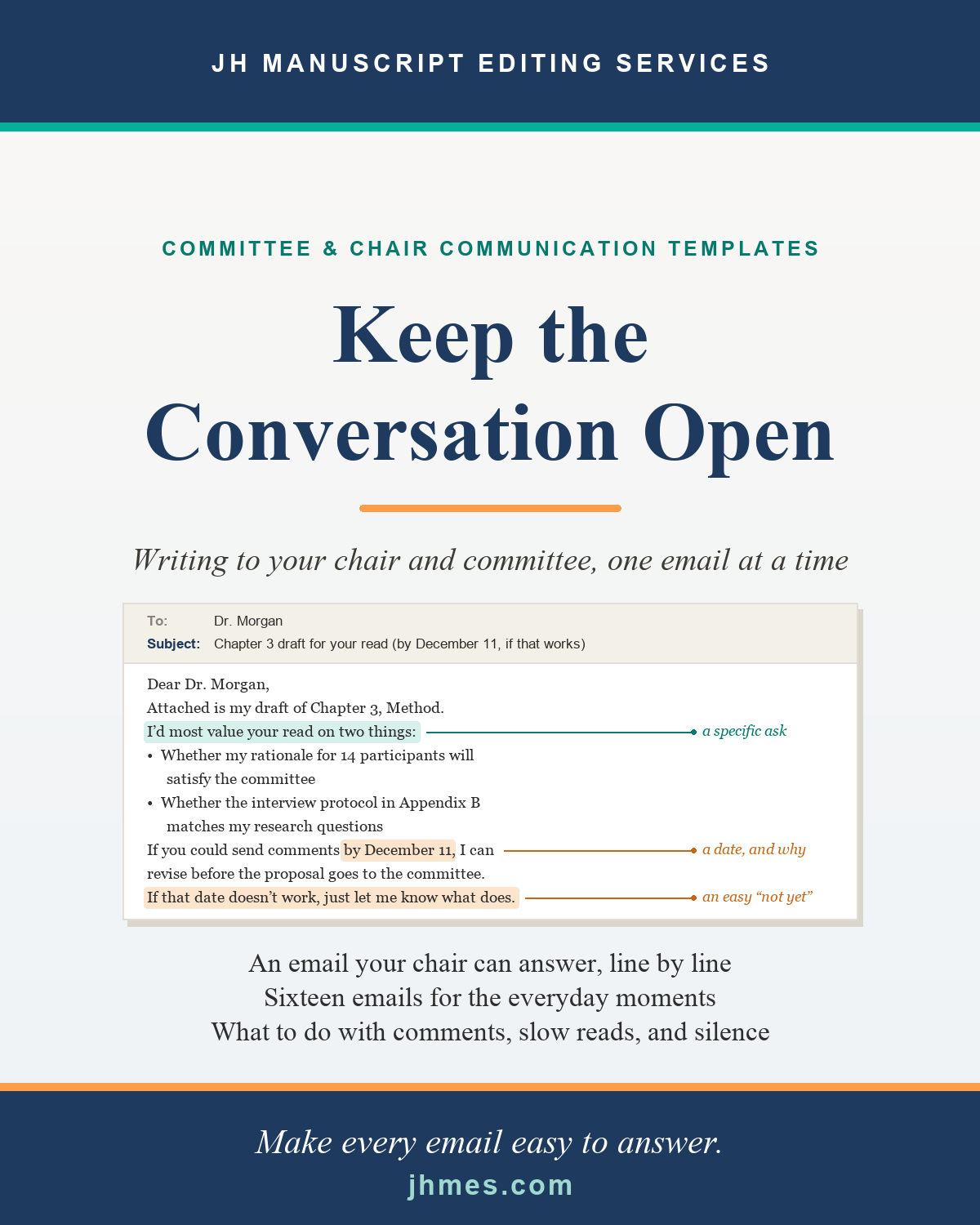
Your chair reads a great deal of email, often on a phone and between other things. The email that gets a quick, useful answer is the one that's easy to answer: one purpose, one clear question, and the date you need it by. This kit shows you how to write that email, and gives you sixteen to start from.
WHAT'S INSIDE
Keep the Conversation Open (PDF guide, 6 pages) — one email taken apart line by line; eight before-and-after swaps for apologetic, vague, and defensive lines; what to do with comments, including when you can't tell what one means and when you see it differently; the slow read, two members who disagree, a life event, and going quiet; and a one-page map of which email to send when
The emails (Word) — sixteen emails, each on its own page with a note on when to send it and a line on why it works: asking how your chair likes to work, inviting a committee member, sending a chapter with a specific ask, asking for feedback on one part, following up when a read runs long, thanking your chair for comments, asking what a comment means, seeing a comment differently, two members who disagree, agreeing on a timeline, moving a date, when life slows you down, asking for a meeting, the recap, a short update, and coming back after going quiet
An honest note: every chair, committee, and program works a little differently. The emails are starting points, and the first one asks your chair how they like to work. Where your chair or your program says otherwise, follow them.
The defense window has its own five emails in the Dissertation Defense Prep Kit, so this kit doesn't repeat them.
PAIR IT WITH
The Dissertation Defense Prep Kit ($19) — five more emails for the defense window, from scheduling to returning your revisions, with the guide, workbook, and slides
The Dissertation Timeline & Milestone Planner ($12) — the plan behind Email 10, with a one-page wall timeline to send your chair
START FREE
Trading Files Safely — a free guide to handing chapters back and forth without losing work
WANT SOMEONE IN YOUR CORNER?
Dissertation coaching — you write it; I help you think it through, keep it moving, and answer your chair with confidence