
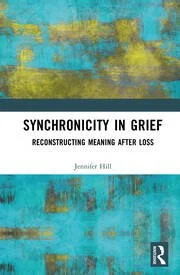
Pre-Orders for Synchronicity in Grief Open at Most Retailers Now, on Routledge’s Website on 9/15/26
Almost everyone apologizes before they tell you about a coincidence in grief. I know how this sounds. Synchronicity in Grief is a book about moments of meaning that seem extraordinary when they happen in bereavement, and these experiences are often hard to talk about with others because they are non-ordinary. The book offers validating evidence that meaningful coincidences are common in grief, and opening to them can catalyze meaning reconstruction and post-loss growth. Pre-orders open now on most retailers’ websites.

From the Editing Desk — August 2026
August was a month of endings — a dissertation delivered early, an article submitted early, and my own book's page proofs and index sent back to Routledge one day before the deadline. It was also the month I ended two editing engagements because the manuscripts were not ready yet, which turns out to be part of the job.
The Last Thing I Will Ever Do to This Book (Or, What an Author Index Actually Is, and Why I Built Mine by Hand)
On Sunday I sent the corrected proofs and the index back to my publisher, and that was the last thing I will ever do to this book. What the proof stage actually asks of an academic author — and why the index I spent thirty hours building turned out not to be an index at all.

Page Proofs and an Index
On Friday 08/21/26, my book came back from Routledge, the publisher, looking like a book — page proofs, typeset into designed pages, along with the job of building the index myself. It is my only review of the full proofs before print, and it changes how you have to read. What the proof stage actually asks of an author: the errors that surface, an index that had to be cut rather than built, and why the last stretch asks for a different muscle than the writing did.
How My Book Came to Be (Or, the Day I Asked Routledge for Copyediting Work and Was Invited to Write Instead)
In the spring of 2025, I emailed Routledge to offer my services as a freelance copyeditor. I was not pitching a book — I did not have one in mind. This is the story of the generous question that turned a request for editing work into my book, Synchronicity in Grief.

From the Editing Desk — July 2026
July was the first month my own book and four other people's manuscripts sat on the same desk. The Routledge copyedit came back with thirty-one author queries; meanwhile a dissertation chapter went out two days early, a five-chapter edit began, and a special issue moved through its decision letters. Here is the shape of the work, with client names and details kept private.
What an Author Query Actually Looks Like
The word query sounds more ominous than the thing it names. When I laid out all thirty-one author queries from my own Routledge copyedit, they came in only four kinds — confirm the edit, check for clarity, supply what’s missing, and decide something only the author can decide. Not one of them was the verdict every writer secretly braces for.
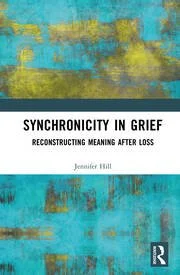
My Book Has a Release Date (Or, the Day Synchronicity in Grief Went Live on Routledge’s Website)
This week my book got a release date, a cover, and a page on Routledge’s website — an ISBN, a table of contents, and a description. On the quiet, unmarked milestone of your book becoming real online, and where the journey goes next: page proofs, pre-orders (September 15, 2026), and publication October 19, 2026.
Copy Editing Phases And Scheduling The Work (Or, How I Returned My Copy Edited Files to Routledge 4 days Before My Deadline)
Late last month the copyedit of my book arrived; this past weekend I sent it back — four days early. Why I gave my own book a weekend of undivided attention instead of borrowing my clients’ weekday hours, and what the long, unglamorous end of publishing actually asks of you.
Thirty-One Queries in a Hundred Thousand Words
Everyone bracing for a copyedit imagines a manuscript that comes back bleeding. My own book came back with thirty-one author queries across a hundred thousand words — and one chapter with none at all. The real numbers from a real copyedit, and why a change count is not a damage report.
The Copyeditor Caught a Name I’ve Read a Thousand Times
There is a name in my field I have read, written, and taught for years — and in my own book about grief, I spelled it wrong. My copyeditor caught it. What that one query taught me about expertise, blindness, and why no writer can be the last set of eyes on their own work.
What an Academic Editor Actually Does — and Why It’s So Much More Than Grammar
A prospective client recently told me he didn’t need an editor — he’d been an English major. I hear a version of this every week. Here’s the truth about what an academic editor actually does, why it’s about far more than grammar, and why good judgment is the one thing software still can’t replace.

Before I Was an Editor, I Was the Classmate Everyone Sent Their Papers To
Long before the Ph.D., the business, or the book, I was the one my cohort sent their drafts to. The origin story of how editing found me — and what it taught me about helping a piece become what it is trying to be.

What Editing Other People’s Books Taught Me About Writing My Own
Seventeen years on one side of the editor’s desk, and now my own book is at Routledge. Here is what sitting where my clients sit taught me about revision, perfection, and finally letting the work be what it needs to be.
The Paper I Never Announced: My Synchronicity-and-Grief Research Is Out in the Journal of Humanistic Psychology
Almost a year ago, a peer-reviewed article of mine was published online — and I was so deep in book deadlines and client work that I never said a word about it. So here, belatedly and a little sheepishly, is the study that sits underneath everything I write about grief: my synchronicity-and-meaning research in the Journal of Humanistic Psychology.

The First Email From My Publisher: Inside the Pre-Production Queries
A look behind the curtain at what actually happens after you hit “submit”: the first round of editor queries, the small fixes, and the surprisingly human back-and-forth that quietly turns a manuscript into a book.

I Just Sent My Book to Routledge — On Time
This week I did something I've helped dozens of authors do, but never quite this way: I submitted a full book manuscript to Routledge — on time. It's about synchronicity in grief, and it opens a new series, The Patience of Publishing, where I share the real, unpolished version of what happens after you hit "submit."

Still Here — And Deeper in the Work Than Ever: A 2026 Year-in-Progress Update
JHMES's founder, Dr. Jennifer Hill, is deep in the most productive season of her scholarly career — completing a book manuscript for Routledge on synchronicity in grief while continuing to take on select editing projects. Read her candid reflection on what writing under deadline teaches her about the academic writing life, and what's coming next for JHMES.

Looking Back on 2025: A Year of Growth, Expansion, and New Horizons at JHMES
JHMES's transformative 2025 includes a published article in Journal of Humanistic Psychology on synchronicity in grief, a Routledge book contract, special topics editorship at International Journal of Transpersonal Studies, partnership with California Institute of Human Sciences, and continued dissertation support for psychology researchers and early career academics.