
 Image 1 of 1
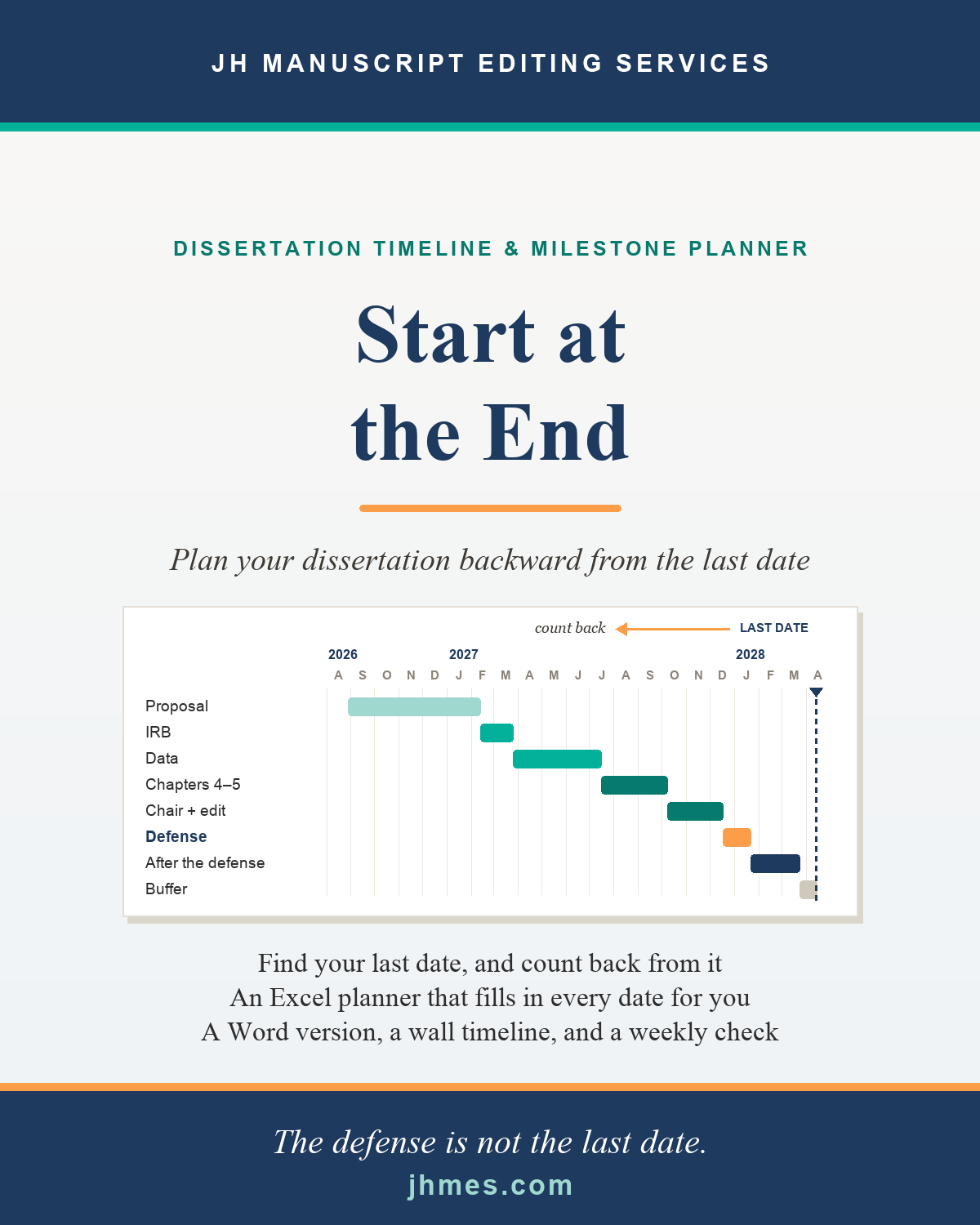
Most dissertation plans are built forward from today, and they drift, because nothing at the far end pushes back. When I build a schedule with a client, I build it the other way around. I start at the last date, the one that doesn't move, and count back to today one step at a time.
And the last date is not your defense. After the defense come your committee's revisions, a formatting pass, your graduate school's format review, and the deposit in your university's repository, and each of those has a date too. This planner puts every step on the calendar, from the proposal to the deposit, so you know when each one has to start and what to do this week.
WHAT'S INSIDE
Start at the End (PDF guide, 8 pages) — finding your last date and the dates you don't control; the fifteen steps from the deposit back to the proposal, with starting weeks and what moves each one; counting back in real dates, with weeks off and a buffer on its own line; a worked example; what to do when the plan doesn't fit; why waiting belongs on the plan; a ten-minute weekly check; and a count-back sheet to print
The planner in Excel — type your graduation date, and every step's start and finish date fills in. Change any step's weeks, add weeks off for breaks, or type a date someone else has set, like your defense, and the plan counts back from it. It tells you whether your next step can still start on time, flags any date that has passed, and draws a wall timeline that prints on one page
The planner in Word — the same four pages, to fill in on screen or on paper: Dates to Get, My Timeline, Wall Timeline, and Weekly Check
An honest note: the weeks in the planner are starting numbers, not promises. Deadlines, review times, and rules vary by school, program, IRB, and committee. The guide shows you who to ask, and where your school says otherwise, follow it.
PAIR IT WITH
The Dissertation Defense Prep Kit ($19) — the three weeks before your defense, where this planner hands off
The Doctoral File Toolkit ($9) — the file side of the plan: a version log for every handoff, backups, and one clean master
START FREE
Are You Ready for Editing? — a free two-minute quiz, for the step where your manuscript is ready for its final edit
WANT AN EDITOR ON YOUR CALENDAR?
Dissertation editing — start with a free sample edit, then get a clear written quote and timeline