
 Image 1 of 1
A study takes shape in pieces, and the thinking behind it happens over months, not always at your desk. You settle a research question in a meeting, set an instrument aside in an email, and work out your sample size on a walk. Months later, your committee asks why you chose this design and not that one.
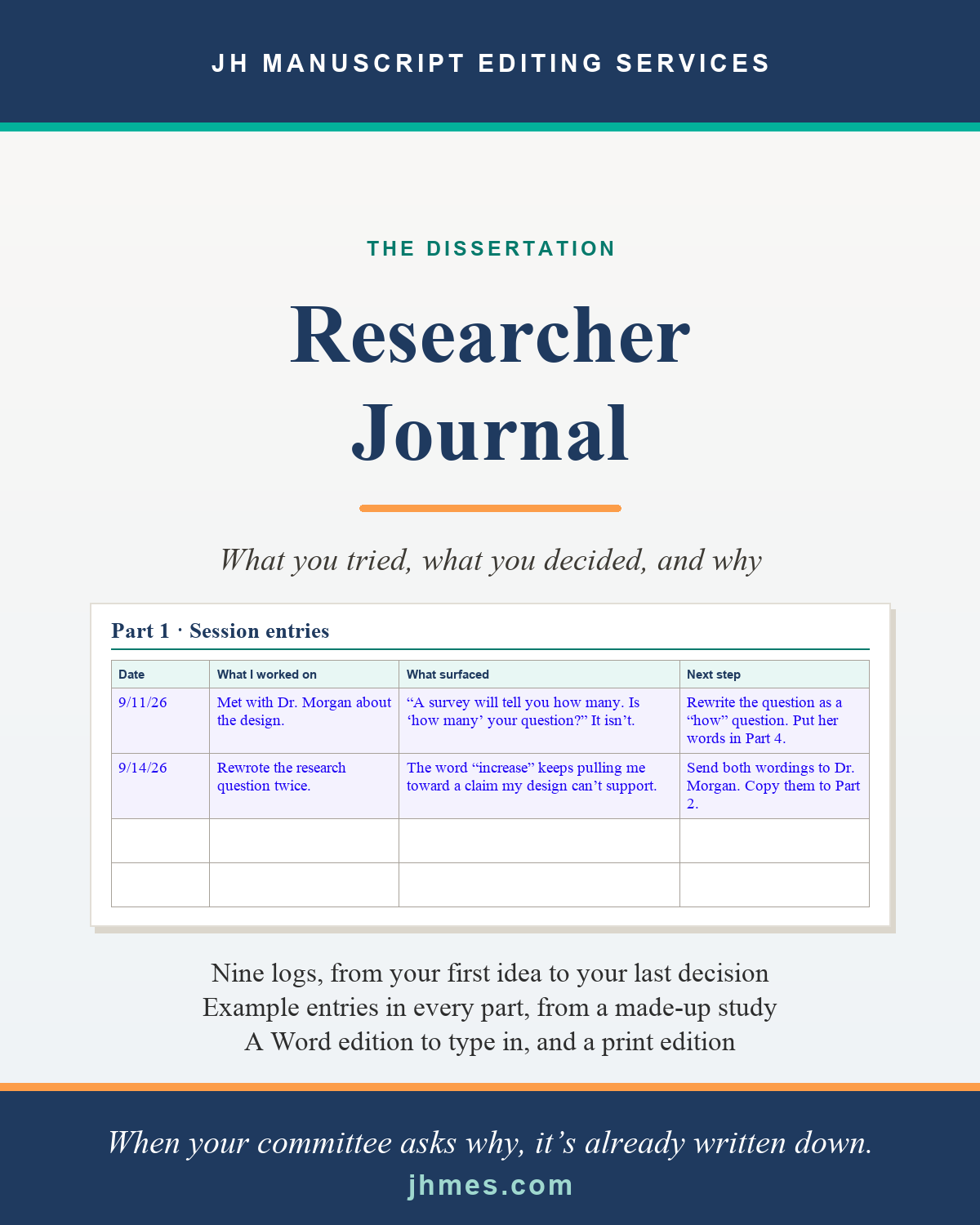
A researcher journal gives that thinking one place to be stored and dated, so the answer is already written down. This one has nine parts, and each feeds something you'll have to write anyway: your problem statement, your methods chapter, your literature review, and your answers at the defense.
WHAT'S INSIDE
The journal (Word) — two pages on why to keep one and how to use it, then nine logs: session entries, a research question log, a methods and instruments log, conversations with your committee, a reading log, decisions, a parking lot for ideas that belong after the dissertation, position of the researcher, and questions for your next meeting. Every log opens with example entries from a made-up interview study, so you can see what a useful entry looks like before you write your own
The print edition (PDF, 11 pages) — the same nine parts with blank logs, one part to a page, for writing by hand
It works for any design. Part 3 logs instruments, data sources, and methods, whether you're choosing a survey or drafting an interview guide.
An honest note: this is a private working journal, not a form your program requires. If your design names a reflexive journal as part of the study's record, as some qualitative designs do, ask your chair what your committee expects to see.
PAIR IT WITH
The Committee & Chair Communication Templates ($9) — sixteen emails for the conversations you'll log in Part 4, from sending a chapter to asking what a comment means
The Dissertation Defense Prep Kit ($19) — when your committee asks why, the answers start in Parts 3 and 6; this kit helps you say them aloud
START FREE
WANT SOMEONE IN YOUR CORNER?
Dissertation coaching — you write it; I help you think it through, keep it moving, and answer your chair with confidence