
 Image 1 of 1
Your methodologist will ask why you chose this instrument and not another one. The answer is easier to give when you have looked each instrument up, written down what its authors report, and set the candidates side by side.
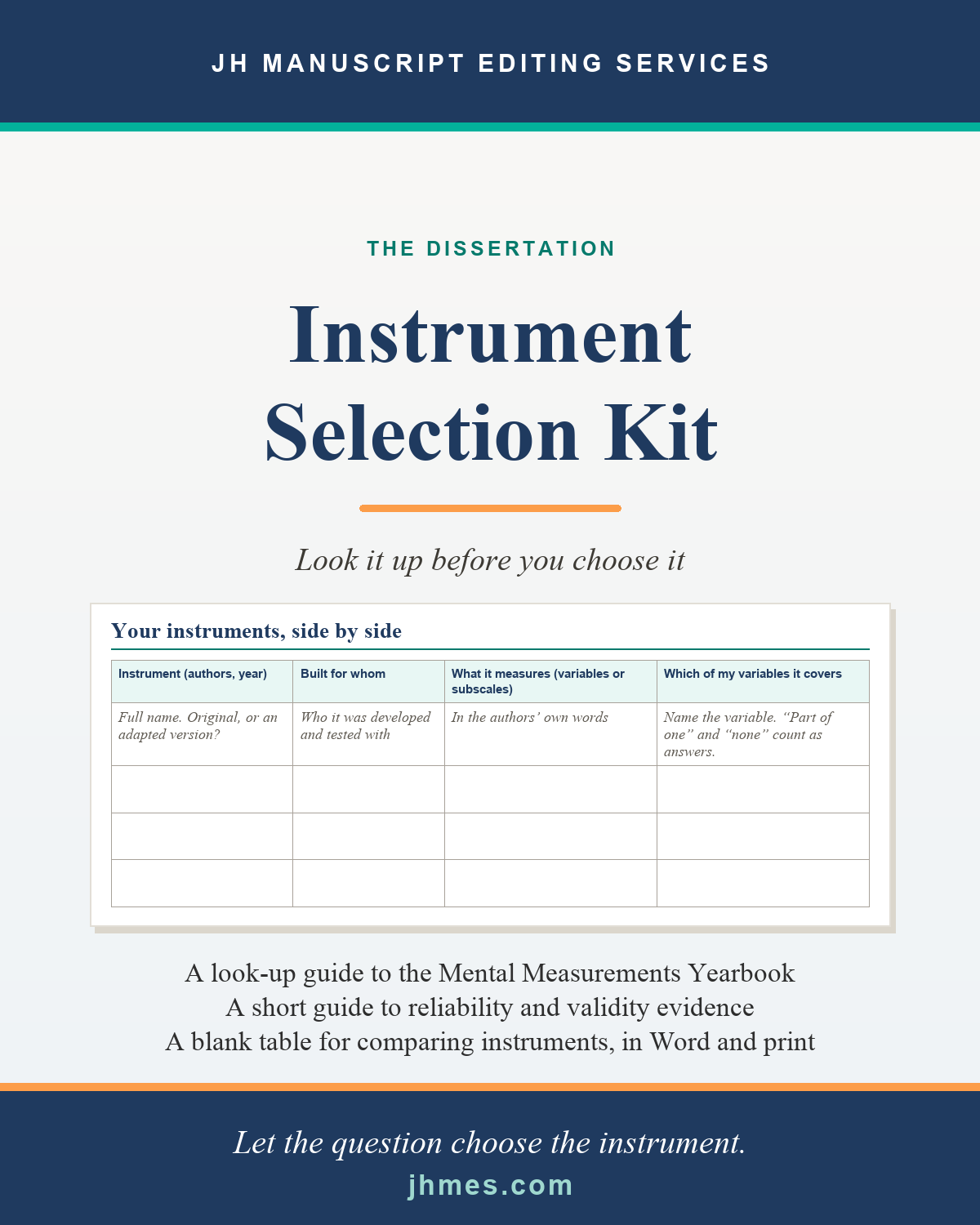
This kit has two short guides and one table. It is for quantitative and mixed-methods studies that use a survey, scale, or test someone else built.
WHAT’S INSIDE
The look-up guide (Word): what the Mental Measurements Yearbook is and what it leaves out, how to find it through your library and search it, how to read an entry with your own study in mind, and where to look when an instrument is not in it
Let the Question Choose the Instrument (Word): a short guide to the alignment test, to what test–retest reliability, internal consistency, and validity evidence tell you and what to write down for each, and to reading the Method section of a study that used the instrument. Then a blank landscape table with eleven columns, one row for each instrument, to type in
The print edition (PDF, 4 pages): the same two guides, and the table with taller rows for writing by hand
The guidance on reliability cites three published sources, with their DOIs, so you can read them and cite them yourself.
An honest note: the table is blank on purpose. This kit does not choose an instrument for you or tell you that a figure is good enough. That decision belongs to you and your committee. It is also not a way into the databases. You reach the yearbook, APA PsycTests, and Health and Psychosocial Instruments through your university library, and this kit is independent of their publishers.
PAIR IT WITH
The Dissertation Researcher Journal ($9): one dated place for what you tried and why. Its methods and instruments log is the running record behind this table
The Dissertation Defense Prep Kit ($19): when your committee asks why this instrument, this kit helps you say the answer aloud
START FREE
WANT SOMEONE IN YOUR CORNER?
Dissertation coaching: you write it; I help you think it through, keep it moving, and answer your chair with confidence